Blog

  • The Evolution of Phishing

    The Evolution of Phishing

    In today’s digital threat landscape, phishing has evolved from clumsy spam emails into sophisticated, targeted attacks capable of fooling even seasoned professionals[1]. Cybercriminals are now blending social engineering with powerful AI-generated content—like deepfake videos—to impersonate high-profile individuals, increasing the success rate of their attacks. One of the most dangerous forms of this deception is called spear phishing—and it’s catching many organisations off guard.

    Let’s break down what these terms actually mean before diving into a chilling real-world example that recently hit close to home.

    Phishing Terms Explained

    Term Description
    Phishing A broad cyber-attack using deceptive emails, messages, or websites to trick people into revealing credentials or sensitive info.
    Spear Phishing A more targeted form of phishing aimed at a specific individual or organisation using personalised content to increase credibility and success.
    Impersonation Attack A social engineering tactic where the attacker pretends to be a trusted individual—like a CEO, vendor, or colleague—to manipulate the target.
    Deepfake AI-generated synthetic media (video, audio, or images) to create realistic but fake representations of individuals.

    Real-World Scenario: Spear Phishing Meets Deepfake Technology

    In April 2025, an Australian superannuation fund became the target of a highly coordinated cyber-attack[1].

    Here’s how it unfolded:

    • Cybercriminals impersonated a senior executive at the fund, using a fake email domain that closely mirrored the real one.
    • They included a highly realistic deepfake video of the executive requesting urgent access to member account details.
    • Several employees, believing the video was legitimate, provided internal credentials.
    • Attackers then accessed member accounts and breached sensitive financial data.

    This wasn’t a typical phishing scam—it was a sophisticated, multi-layered spear phishing campaign amplified by AI and psychological manipulation.

    Why This Matters

    Spear phishing targets trust—not just systems. With AI-generated deepfakes and impersonation tactics, even trained employees can be misled.

    These attacks are:

    • Fast to produce (thanks to generative AI)
    • Highly scalable
    • Exceptionally convincing

    For sectors like finance, superannuation, healthcare, and government, this is a growing and urgent threat.

    What Can Organisations Do?

    Modern phishing campaigns require proactive, organisation-wide action. Here’s where to start:

    • Implement MFA (Multi-Factor Authentication)
      Prevent unauthorised access—even if credentials are compromised.
    • Encourage a “Trust, but Verify” Culture
      Train staff to verify all unusual or urgent requests, even from executives.
    • Deliver Targeted Cybersecurity Awareness
      Educate staff specifically on spear phishing, impersonation, and deepfakes.
    • Monitor for Executive Impersonation
      Use domain protection (DMARC, SPF, DKIM) and watch for spoofed accounts.
    • Protect the C-Suite
      Apply enhanced verification and regular training for executive teams.
    • Ensure Your Response Plans Address This Threat
      Review your incident response and crisis management plans. Do they include:

      • Executive impersonation scenarios?
      • Credential compromise procedures?
      • Deepfake-related deception?
    • Test Your Readiness
      Run simulations and exercises to identify weak points. Would your team detect a fake video message from a senior leader?

    How RiskLogic Can Help

    RiskLogic works with organisations to embed cyber risk into your broader crisis and continuity planning. We support your team across:

    • Bespoke phishing simulations and deepfake awareness training
    • Tailored incident response planning for cyber-enabled disruption
    • Scenario exercises for boards, execs, legal, risk, comms, and IT
    • Integration of cyber risk into your Crisis Management Framework
    • Executive post-incident debriefs and resilience maturity reviews

    Whether you’re in finance, infrastructure, healthcare or government—we help you plan, train, and respond with confidence.

    Final Thought

    Cybercriminals are no longer just exploiting systems—they’re exploiting people. Spear phishing campaigns using deepfakes show just how far attackers will go to deceive and disrupt.

    Defending your organisation starts with awareness—but it must evolve into action. Planning, training, and testing your defences is not optional—it’s mission-critical.

    References

    [1] Boyd, T. (2025, April 6). Cybercriminals impersonated super executives in week of mass breach. Australian Financial Review.

    https://www.afr.com/companies/financial-services/cybercriminals-impersonated-super-executives-in-week-of-mass-breach-20250406-p5lpjp

  • AI Cyber Risk

    AI Cyber Risk

    Artificial Intelligence (AI) is transforming cybersecurity. While AI enhances efficiency, it also introduces new security challenges. According to Gartner, 40% of data breaches will stem from AI cyber risk by 2027, highlighting the need for stronger cyber resilience.

    AI cyber risk is not just a theoretical concern—it is already impacting businesses worldwide. From automated cyberattacks to AI-generated fraud, organizations must address these vulnerabilities before they become major security incidents.

    Understanding AI Cyber Risk in Cybersecurity

    The rapid advancement of AI introduces a new layer of cyber risk. Some of the most pressing AI cyber risks include:

    • AI-powered phishing – Cybercriminals use AI to craft highly personalized phishing emails that bypass traditional security filters.
    • Deepfake fraud – AI-generated deepfakes manipulate video and audio, making impersonation attacks more convincing. Learn more about deepfake fraud.
    • AI-driven malware – Adaptive malware leverages AI to evolve, evade detection, and exploit system vulnerabilities.
    • Data manipulation – Attackers target AI models by injecting false data, leading to compromised decision-making and increased cyber risk.
    • Automated cyberattacks – AI enables large-scale, automated attacks that can overwhelm security systems within minutes.

    How RiskLogic Helps Mitigate AI Cyber Risk

    At RiskLogic, we help businesses strengthen their cybersecurity posture with AI-focused risk assessment services. Our AI cyber risk solutions include:

    • AI Cyber Risk Remediation Plans – Identifying and addressing vulnerabilities in AI-driven security systems.
    • AI Cyber Risk Control Assurances – Evaluating cybersecurity frameworks to ensure resilience against evolving threats.
    • AI Cyber Risk Strategic Playbooks – Developing structured plans to mitigate AI-related security challenges.
    • AI Cyber Risk Policies & Governance – Establishing compliance-ready security protocols for AI adoption.

    Find out more about our AI Cyber Risk Assessment services at RiskLogic.

    Why AI Cyber Risk Requires Executive Attention

    AI cyber risk is no longer just an IT issue—it requires leadership oversight. RiskLogic provides board and executive training to help decision-makers:

    • Recognize AI-related vulnerabilities and attack vectors.
    • Implement governance frameworks to address emerging cyber risks.
    • Navigate compliance and regulatory requirements for AI security.
    • Strengthen organizational resilience against AI-driven attacks.

    Best Practices for Managing AI Cyber Risk

    1. Conduct AI Cyber Risk Assessments

    Regularly evaluate security threats associated with AI models and applications. Learn more about the importance of AI risk assessments.

    2. Establish AI Cyber Risk Governance

    Develop clear policies and procedures for secure AI adoption while ensuring regulatory compliance.

    3. Monitor AI Cyber Risk Threats

    Use AI-driven security tools to detect and mitigate cyber risks in real time, preventing attacks before they escalate.

    4. Train Employees on AI Cyber Risk Awareness

    Educate staff on AI-driven threats, including deepfake scams, AI-enhanced phishing attacks, and automated cybercrime techniques.

    5. Secure AI Training Data

    Protect AI models from data poisoning attacks by implementing robust validation and security measures to prevent system corruption.

    6. Partner with AI Cyber Risk Experts

    Work with trusted professionals like RiskLogic to enhance AI security strategies, mitigating risks and improving cybersecurity resilience.

    Why Businesses Must Act on AI Cyber Risk Now

    The AI cyber risk landscape is evolving rapidly. Businesses that fail to address AI-driven threats today could face reputational damage, financial losses, and regulatory penalties.

    With AI-based risks becoming more complex, organizations must take a proactive approach. Implementing strong security frameworks, governance strategies, and AI risk assessments will enable businesses to stay ahead of emerging threats.

    AI cyber risk is both a challenge and an opportunity. The key is ensuring your organization is prepared to handle evolving risks effectively.

    Stay ahead of AI-driven cyber threats. Let’s talk about how RiskLogic can help you develop a resilient AI cybersecurity strategy.

  • Strengthened Aged Care Quality Standards

    Strengthened Aged Care Quality Standards

    The Strengthened Aged Care Quality Standards mark a significant shift in the way aged care services are regulated and delivered in Australia. With a stronger emphasis on safety, dignity, and accountability, providers must now implement more rigorous care practices while maintaining operational efficiency.

    For many aged care providers, these changes represent both an opportunity and a challenge. How can organisations ensure compliance while continuing to provide high-quality, person-centred care? That’s where RiskLogic comes in—helping aged care facilities embrace these reforms with confidence and resilience.

    Breaking Down the Strengthened Standards

    The updated standards demand higher levels of accountability and focus on key areas, including:

    Dignity and Personalised Care

    Ensuring that aged care recipients receive respectful and customised care plans.

    Quality & Safety in Service Delivery

    Strengthening clinical governance, risk oversight, and infection control measures.

    Workforce Development & Training

    Raising the bar for aged care staff qualifications and ongoing education.

    Organisational Transparency & Governance

    Holding leadership accountable for ethical and compliant operations.

    Providers must now proactively align their systems, training, and processes with these new expectations to avoid compliance risks and potential penalties.

    Strategic Steps to Compliance: RiskLogic’s Role

    RiskLogic works closely with aged care providers to streamline their compliance journey, providing strategic guidance and practical solutions. Here’s how we support organisations:

    Developing Resilient Operational Frameworks

    Changes in regulation often require adjustments to internal policies and procedures. RiskLogic assists in establishing governance structures, quality control mechanisms, and risk management frameworks that align with the revised standards.

    Aligning Policies and Procedures with Compliance Requirements

    We help organisations ensure that their internal policies reflect the new aged care quality standards.

    Enhancing Staff Capabilities Through Training

    With a greater emphasis on workforce competence, our targeted training programs and scenario-based learning modules equip aged care teams with the knowledge and confidence to meet compliance requirements.

    Building a Culture of Continuous Learning

    RiskLogic helps aged care providers foster an ongoing learning environment, ensuring staff stay up to date with regulatory requirements.

    Strengthening Incident Response & Crisis Management

    In an environment where service disruptions can have serious consequences, being prepared is non-negotiable. We help organisations establish clear crisis response protocols, ensuring they can handle critical situations effectively while maintaining service continuity.

    Proactive Crisis Management for Aged Care Providers

    Our resilience solutions ensure aged care facilities remain operational even during unexpected disruptions.

    Why RiskLogic?

    We understand that compliance is not just about ticking boxes—it’s about fostering a culture of safety, accountability, and resilience. Our expertise in aged care governance, risk mitigation, and operational continuity ensures that providers are not just meeting the standards but exceeding them.

    Take Action Today

    The transition to the Strengthened Aged Care Quality Standards doesn’t have to be overwhelming. With RiskLogic’s expert guidance, your organisation can navigate these changes efficiently while maintaining a high level of care for residents and clients.

    Let’s ensure your aged care service is compliant, resilient, and prepared for the future. Get in touch with RiskLogic today to explore how we can support your journey to compliance and operational excellence.


  • Navigating CPS 230

    Navigating CPS 230

    Navigating CPS 230: How Risklogic Empowers Organisations on Their Compliance Journey

    As the CPS 230 Operational Risk Management standard takes effect, organisations regulated by APRA (Australian Prudential Regulation Authority) are facing a significant transformation in how they manage and mitigate operational risks. The new requirements, which were finalised in July 2023 and come into effect on 1 July 2025, presents both a challenge and an opportunity for organisations to strengthen their Operational Resilience.

    At Risklogic, we’re working closely with organisations to guide them through the journey of aligning with CPS 230. While the deadline is fast approaching, it’s not too late to take decisive action. Here’s how Risklogic is supporting businesses to meet these requirements with confidence.

    What is CPS 230?

    CPS 230 is APRA’s new cross-industry prudential standard designed to ensure regulated entities manage operational risk, business continuity, and third-party arrangements effectively. Key requirements include:

    • Operational Risk Management: Establishing robust frameworks to identify, manage, and mitigate risks.
    • Business Continuity Planning: Ensuring organisations can maintain critical operations during disruptions.
    • Third-Party Risk Management: Implementing strict controls to manage risks associated with outsourcing and third-party arrangements.

    The standard applies to all APRA-regulated entities, including banks, insurers, and superannuation funds.

    The CPS 230 Compliance Timeline

    The final standard was issued in July 2023, giving organisations a two-year lead time to implement the required changes. The clock is ticking, with compliance mandatory from 1 July 2025. While many organisations have started this journey, some are still in the early stages, and time is running out to ensure readiness.

    How Risklogic is Helping Organisations Navigate CPS 230

    Here’s how we’re making a difference for our clients to achieve compliance:

    1. Gap Assessments and Roadmaps

    We begin by assessing where your organisation stands today against CPS 230 requirements. This includes:

    • Identifying gaps in existing Operational Risk management, continuity planning, and material service provider framework.
    • Developing a clear, actionable roadmap to bridge these gaps before the compliance deadline.

    Our experts ensure you know exactly what needs to be done and when.

    1. Strengthening Operational Risk Frameworks

    CPS 230 demands a comprehensive approach to operational risk. Risklogic assists in:

    • Design and/ or upliftment of tailored risk management frameworks to align with prudential standard requirements.
    • Establishing monitoring and reporting mechanisms to track risks and ensure continuous improvement.

    We ensure your frameworks not only meet regulatory expectations but also enhance overall resilience.

    1. Enhancing Business Continuity Plans

    The standard emphasises the importance of continuity of critical operations. Risklogic provides support by:

    • Conducting business impact analysis for identification and documentation of critical operations and related sub processes.
    • Developing and testing business continuity plans tailored to severe but plausible scenarios.
    • Ensuring preparedness for quick and effective recovery from disruptions.

    With Risklogic, your business continuity planning becomes a competitive advantage.

    1. Management of Material Service Providers

    Third-party arrangements are a key focus of CPS 230, requiring robust due diligence and monitoring. Risklogic helps by:

    • Reviewing existing supplier and service provider framework and arrangements.
    • Enhancing current frameworks to align with regulatory requirements.
    • Establishing ongoing monitoring processes to ensure compliance and performance.

    We empower organisations to confidently manage their third-party dependencies.

    1. Training and Engagement

    Cultural alignment is crucial for CPS 230 compliance. Risklogic provides:

    • Training programs for staff at all levels to build awareness and understanding of CPS 230 requirements.
    • Workshops for leadership teams to embed operational risk management into organisational strategy.

    We help create a culture where compliance becomes second nature.

    It’s Not Too Late to Act

    While the CPS 230 compliance deadline is looming, there is still time to act. Risklogic’s proven methodology and expert guidance ensure your organisation can meet the deadline with confidence and avoid the risks of non-compliance.

    The journey to compliance isn’t just about meeting regulatory requirements—it’s about strengthening your organisation’s resilience and protecting your stakeholders.

    Ready to Get Started?

    At Risklogic, we’re here to support your CPS 230 journey, no matter where you are in the process. Contact us today to learn how we can help your organisation navigate these changes and emerge stronger, more compliant, and more resilient.

    📞 Contact Risklogic to begin your compliance journey today.

    © 2024 Risklogic. All rights reserved.

  • Leading the Charge in Cyber Resilience: How Risklogic Empowers Organisations

    Leading the Charge in Cyber Resilience: How Risklogic Empowers Organisations

    Why Cyber Resilience Matters

    In today’s interconnected world, cyber security is more critical than ever. From small businesses to large enterprises, organisations face an increasingly complex landscape of threats. Cyber resilience isn’t just about having the right tools; it’s about embedding strong governance, preparedness, and culture throughout every layer of the organisation.

    How Risklogic Empowers Organisations

    1. Strengthening Governance and Leadership

    Effective cyber resilience starts with strong leadership. Boards and senior management must treat cyber security as a strategic issue, not just a technical one. Risklogic works with leadership teams to:

    • Define clear roles and responsibilities.
    • Develop comprehensive, long-term cyber strategies.
    • Prepare for incidents with scenario testing and tailored incident response plans.

    We ensure your organisation is ready for the challenges ahead.

    2. Tailored Support for SMEs and NFPs

    Small and medium-sized enterprises (SMEs) and not-for-profit organisations (NFPs) often face resource constraints. Risklogic offers cost-effective, practical solutions, including:

    • Staff training on cyber hygiene and phishing awareness.
    • Managing access controls for critical systems and data.
    • Regular updates on emerging cyber threats.

    Our support helps smaller organisations achieve resilience without unnecessary complexity.

    3. Being Prepared for the Inevitable

    Cyber incidents are a question of “when,” not “if.” Risklogic helps organisations prepare by:

    • Running scenario-based exercises to refine incident response plans.
    • Designing communication strategies to keep stakeholders informed.
    • Addressing regulatory obligations with confidence and clarity.

    Preparation ensures organisations recover faster while protecting their reputation and stakeholders.

    4. Embedding a Culture of Cyber Resilience

    The best defence against cyber threats is a culture where everyone is accountable. Risklogic helps organisations embed resilience by:

    • Conducting engaging training sessions and phishing simulations.
    • Building accountability at all levels, from the boardroom to frontline employees.
    • Incentivising strong cyber practices to foster ongoing vigilance.

    A resilient culture reduces human error and strengthens your overall defences.

    5. Expert Guidance Through Recovery

    When an incident occurs, quick and decisive action is critical. Risklogic guides organisations through recovery with:

    • Crisis support to assist management with decision-making.
    • Regulatory compliance to meet obligations.
    • Post-incident reviews to identify lessons and implement improvements.

    We help organisations recover and emerge stronger, ready for future challenges.

    Why Choose Risklogic?

    Cyber resilience requires expertise, foresight, and a tailored approach. Risklogic partners with organisations across industries to build bespoke strategies that align with their goals and needs. Whether you’re preparing for the future or navigating a current challenge, we’re here to help.

    📞 Contact us today to learn how Risklogic can safeguard your organisation’s future. Together, we’ll build resilience that lasts.


    © 2024 Risklogic. All rights reserved.
  • Evolving Your Risk Management Strategies: Before and After RiskSmart Hub

    Evolving Your Risk Management Strategies: Before and After RiskSmart Hub

    Risk and resilience management training is more important than ever before for organisations, in an ever-evolving environment where uncertainty is the only certainty. It’s crucial that organisations not only implement their training, but to do so efficiently and effectively.

    In the past, traditional methodologies dominated the industries approach to risk management training – but offered limited scope for flexibility and personalisation. However, new advancements in risk and resilience management training e-learning platforms provide a revolutionary approach that is flexible, cost-effective, and completely remote.


    The Traditional Approach: Inflexible, Time-Consuming, and Costly

    emergency exercise

    Traditional risk and resilience management training is delivered through instructor-led sessions, workshops, seminars, and even off-site trainings. These delivery methods, while comprehensive, often fail to account for the unique needs, constraints, and preferences of individual learners or organisations. The in-person nature of traditional training methods also present their own set of challenges.

    These methods are limited by geographic constraints. Learners must be in a specific location at a specific time to participate in training. The logistics of coordinating schedules and gathering multiple individuals in one place results in significant time consumption and often leads to delays.

    Traditional training methods also lack flexibility. The training’s pace is dictated by the curriculum set for the time allotted. Learners who may need more time to absorb certain concepts of traditional training methods don’t have the luxury of learning at their preferred pace and are instead forced to keep up with the classroom.

    Costs are also a significant issue of traditional training methods. Beyond the training fees themselves, additional costs such as travel, venue booking or even getting renowned experts on board can price many organisations out of top-tier risk management training.


    e-Learning & RiskSmart Hub: A Better Way Forward

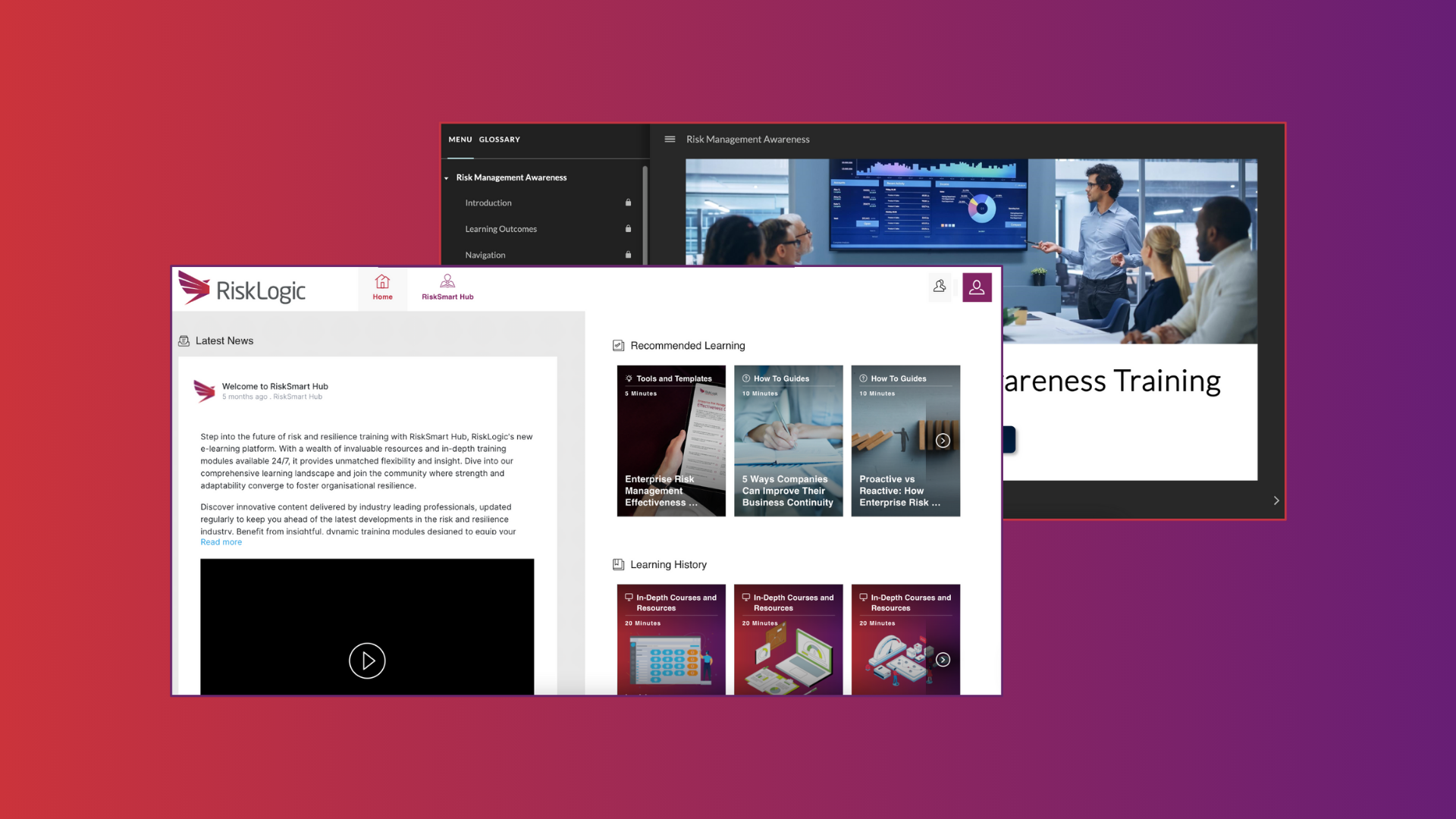
    RiskSmart Hub revolutionises the landscape of risk and resilience management training, addressing the shortcomings of traditional methodologies through a flexible, cost-effective, and remotely accessible solution.

    The most evident benefit is the elimination of logistical constraints. RiskSmart Hub, as an online e-learning platform, can be accessed from anywhere, at any time, from any device. This flexibility allows individuals to learn at their convenience, ensuring an uninterrupted work schedule which does not need to adapt to an allotted training schedule.

    RiskSmart Hub’s diverse course categories cater to a broad range of organisational needs and knowledge levels, from the basic foundations of risk and resilience management to in-depth nuances. The training can be personalised to everyone’s pace, as opposed to the ‘one-size-fits-all’ approach of traditional training.

    Beyond that, RiskSmart Hub delivers a breadth of interactive and engaging content, which improves learner retention and deepens their understanding of the course material.

    RiskSmart Hub is also a more cost-effective and affordable option. Without physical logistic costs, it is cheaper to run, making it a great choice for organisations with tighter training budgets. It provides world-class risk and resilience management training that’s accessible to all.

    Notably, RiskSmart Hub also makes it easier to measure and track learner progress. Comprehensive learning history allows learners to easily access what they have previously learnt through the platform – something that is far more difficult with traditional training methods.


    An Evolution in Risk and Resilience Management Training

    Transitioning from traditional methods to risk and resilience management training with RiskSmart Hub entails not just adopting a new platform, but embracing a shift in how we view and approach training in the risk and resilience management industry.

    RiskSmart Hub’s approach offers flexibility, customisation, and accessibility – countering the inflexibility and high costs of traditional methods. You’re no longer just providing training but optimising the process of learning and empowering your teams with the tools to handle risk more effectively.


    Contact Our Expert Team

    Learn More About RiskSmart Hub

  • Prioritising Human Factors in Business Continuity Planning

    Prioritising Human Factors in Business Continuity Planning

    The wheels of any organisation are set in motion by its people. While systems, strategies, and bottom lines remain the bedrock, it is people who are the real driving forces behind business continuity and success. Despite this, the element of human factors often lacks attention when it comes to business continuity planning.


    The Human Element in Business Continuity Planning

    The human element in business continuity planning is often overlooked. Organisations must realise that it’s their people who execute their carefully crafted strategies during a crisis.

    This human element encompasses the roles, reactions, and resilience of a team within an organisation. Their understanding of what to do and why they’re doing it in a crisis significantly influences the effectiveness of a business continuity plan.

    Acknowledging everyone’s unique insights allows for more effective and holistic planning. Equally critical is effective communication before, during, and after a crisis incident. Everyone should understand their roles, responsibilities, and the impact of their actions on the recovery effort.

    Another paramount factor is training and preparation. Regular drills can ensure team readiness and efficiency during a crisis. Additionally, fostering organisational resilience is substantial, that is, cultivating a team that can withstand adversity and recover swiftly.


    Taking A People-Centric Approach

    A people-centric approach towards business continuity planning is fundamental to ensure successful recovery during a crisis. Such an approach prioritises not only processes and systems, but also the human element that drives all organisational activities.

    This strategy begins with fostering a shared understanding of the business continuity plan and its objectives among all individuals. Ensuring everyone has knowledge of their role and actions during a disruptive event contributes to the plan’s efficient execution.

    Next, open communication is pivotal. Regular communication outside of crises, bolsters trust within the workforce, resulting in higher commitment and performance during periods of disruption. It acts as a two-way channel, helping leaders gauge team sentiment and adapt accordingly.

    Training remains a core component of a people-centric approach. When team members are confidently prepared through regular drills and training sessions, their response during an actual crisis can be swifter and more efficient.

    Providing support and care to your team in challenging times can result in increased resilience to adversity. This translates to a quicker recovery from disruptions, with individuals feeling empowered and valued. Embracing a people-centric approach to a business continuity planning allows an organisation to navigate successfully through unforeseen disruptions.


    Contact Our Expert Team

    Learn More About Business Continuity Planning

  • How Efficient Cyber Resilience Strategies Protect Your Business

    How Efficient Cyber Resilience Strategies Protect Your Business

    In the modern digital realm, cyber resilience has surfaced as a crucial tool for the growth of any organisation. It’s more than a buzzword, presenting itself as a crucial aspect of the blueprint for organisations from diverse sectors, irrespective of size.

    Cyber resilience is the capacity of an organisation to adequately prepare for, respond to, and recover from cyber threats. The aim is to cause as little disruption to operations as possible. Efficient cyber resilience involves an anticipatory approach to potential threats, lowering their overall impacts, and reinforcing an environment that can weather the storm of a cyber breach and still stand tall.

    How though, do effective cyber resilience strategies function to protect your business? The answer is multifaceted – blending risk management, cybersecurity principles, and by promoting business continuity.

    Read more down below to find a break-down of an efficient cyber resilience plan:


    1- Anticipating Threats

    The first line of defence in any cyber resilience strategy involves the proactive identification and prediction of potential threats. By leveraging intelligence-led insights and data analytics, organisations can stay one step ahead of cyber malefactors, safeguarding against everything from cybercriminals to internal threats.

    The art of anticipation centers around the ability to recognise patterns and extrapolate potential future scenarios. This allows organisations to anticipate and effectively plan for an array of cyber attacks. Whether it’s phishing, ransomware, data breaches or insider threats, an efficient cyber resilience strategy prepares you for them all.

    It’s also essential to realise that cyber threats aren’t solely external. Inside threats, whether intentional or accidental, account for a significant portion of cyber incidents. Threat intelligence can help in identifying and anticipating unusual employee behaviour that might indicate a potential misuse of access privileges.

    Therefore, equipping your staff with the right kind of knowledge is extremely important. Regular training and awareness programs build a culture of vigilance, preparing your team to identify and respond to threats swiftly, thus mitigating any potential harm.

    Being proactive rather than reactive in threat anticipation could be the defining factor between minimal damage and catastrophic loss. With robust cyber resilience strategies, your organisation is not only prepared for the threats of today, but also for the evolving challenges of tomorrow.


    2- Implementing Robust Security Measures

    The backbone of cyber resilience is a robust cybersecurity framework. This includes the use of high-tech firewalls, encryption that fortifies sensitive data, multi-factor authentication methods, and routine patching and updates.

    A well-rounded and robust security framework goes a long way in fending off common cyber threats. Reliable firewalls function as the first line of defence, filtering out suspicious or harmful incoming traffic, while state-of-the-art encryption tools help safeguard sensitive data, both at rest and in transit.

    The role of multi-factor authentication in providing an additional layer of security is vital in a resilient cybersecurity framework. By requiring more than one method of verifying a user’s identity, it greatly reduces the risk of unauthorised access.

    Yet, even the most advanced systems are only as secure as their latest update. Regular patch management ensures your software is secured against known vulnerabilities, while constant updates keep your systems compatible and optimally functioning in a rapidly evolving digital ecosystem.

    Having these tools and technologies available to your organisation is invaluable against threats that may have never been encountered before. As these threats are dealt with, they can be added to your resilience plans and anticipated more accurately in the future.


    3- Training and Awareness

    Perhaps the most effective tool against cyber threats is your people. A single ill-judged click on a malicious link can spell disaster, cascading into a myriad of unexpected cyber threat events. It is the responsibility of each individual to understand and abide by the principles of cyber safety. Regular trainings and routine awareness programs can equip your personnel to detect threats and prevent breaches.

    The aim isn’t just to develop technical acumen but also to foster a culture of cyber vigilance that is ingrained in your day-to-day operations.

    Training programs should not be designed as a one-size-fits-all model. Instead, they should be stratified according to different roles within the organisation. Frontline staff may require training that emphasises recognising and responding to phishing attempts, while management-level personnel might benefit from sessions focusing on recognising breaches of best practices tied to the use of customer data.

    In addition, establishing clear communication channels for reporting potential threats is vital. Quick action in response to a well-informed warning can save an organisation from serious damage or downtime.

    Cyber resilience isn’t simply about implementing technology but developing a proactive and knowledgeable workforce. With a well-trained and cyber-aware team, you can seriously strengthen your defence against cyber threats and fortify your business’s resilience, irrespective of the digital landscape’s dynamic nature.


    4- Developing a Response Plan

    No system, irrespective of the technology used, is impervious to breaches. Proper cyber resilience strategies are aware of this fact and include incident response plans in their framework. These plans are essentially blueprints that clearly define the course of action when facing a cyber-attack, reducing the response and recovery period.

    In the unfortunate event of a breach, time becomes your most precious, yet fleeting, asset. Every second can make a difference between minor disruptions and major losses. Here’s where a thoroughly developed response plan comes into play. Detailed and planned in advance, these contingency mechanisms can help you spring into action without delay, saving precious time, and reducing the ramifications of the breach.

    A sound incident response plan should map out clear responsibilities and escalation paths, ensuring no confusion arises during crisis scenarios. It ideally includes clear protocols for identifying and isolating the compromised component of the system, notifying the relevant authorities and stakeholders, and addressing legal or PR concerns.


    5- Regular Testing and Review

    Cyber threats are not a static enemy but instead evolve rapidly, becoming ever more sophisticated.

    At the heart of cyber resilience lies an important principle – the constancy of change. As cyber threats continue to evolve and make use of increasingly sophisticated tactics, an effective cyber resilience strategy demands constant adaptation. This requires a cycle of frequent testing and reviews, allowing organisations to identify potential weak spots and make timely improvements.

    Conducting periodic audits of your cybersecurity infrastructure and practices, checking for outdated software, flawed configurations, and potential vulnerabilities yet to be patched are all necessary in an evolving cyber landscape. It’s important to also ask the question continuously; are there emerging tactics or types of attacks that your current strategy may not be adequately equipped to deal with? Routine assessments help identify these, ensuring you’re not caught off guard.

    Beyond technology, regular reviews should also extend to training and awareness initiatives. Are the existing programs effectively engaging employees? Are there ways to improve their reach or effectiveness? Such assessments can help keep awareness programs relevant and impactful.


    RiskLogic distinguishes itself as a leader in providing cyber resilience solutions that are tailored, comprehensive, and potent enough to safeguard organisations amidst the rapidly transforming digital environment. Our cyber resilience solutions are specifically crafted to empower organisations to withstand cyber threats and swiftly rebound from attacks, thereby protecting critical operations, preserving reputation, and safeguarding the financial health of your organisation.

    If an organisation is to flourish amidst an ever-evolving digital environment, robust cyber resilience quickly transforms from a mere option to a non-negotiable instrument in the arsenal, safeguarding organisational priorities and assets.


    Contact RiskLogic to explore Cyber Resilience Management solutions

    Learn More About Cyber Resilience Management

  • The Rapid Evolution of Cyber Resilience in a Modern Business Landscape

    The Rapid Evolution of Cyber Resilience in a Modern Business Landscape

    Within a digitally powered landscape, the labyrinth of cyber threats grows more potent and pervasive by the second for organisations. The evolving focus on cyber resilience management is meant to protect businesses from the potentially devastating consequences of cybercrime.

    Cyber resilience is a rapidly evolving factor of organisation resilience that advocates for the capability to bounce back from cyber incidents swiftly and efficiently. It emphasises building an organisations ability to continue operations even during a breach while working towards full recovery. This resilience involves a detailed plan to respond to incidents, mitigating their impact, and restoring normal operations as quickly as possible.


    Threats Faced by Modern Organisations

    Earlier, standard security protocols were deemed sufficient, but an evolution in threats necessitates dynamic, end-to-end responses.

    These threats range from internal data breaches, malware attacks, phishing, and ransomware, to state-sponsored cybercrime and Advanced Persistent Threats. They wreak havoc not just by disrupting operations, but by stealing valuable intellectual property and sensitive data, damaging brand image, and eroding customer trust.

    Read below for some additional information about these threats:


    • Internal Data Breaches: Often overlooked, internal data breaches – intentional or unintentional – can be as devastating as external attacks. These breaches could result from internal negligence, misconduct, or from a lack of adequate security measures and protocols.


    • Malware Attacks: One of the most common cyber threats, malware refers to any malicious software used by cybercriminals to disrupt operations, gather sensitive information, or gain access to private networks. Variants include viruses, worms, spyware, and ransomware.


    • Phishing Attempts: These attacks usually take the form of deceptive emails, text messages or websites that trick individuals into revealing sensitive information like passwords or credit card numbers. Sophisticated phishing techniques can even make convincing replicas of legitimate websites or emails from trusted sources.


    • Ransomware: A potent form of malware, ransomware attacks encrypt a victim’s files, with the attackers demanding a ransom in return for the decryption key. Without compensation, the encrypted data is lost permanently.


    • State-Sponsored Cybercrime: This involves cyberattacks initiated by a state or a state-sponsored group, often targeting critical infrastructure, economic assets, or government organisations of another nation.


    • Advanced Persistent Threats (APTs): These are complex, stealthy, and prolonged threats usually driven by an intent of espionage or sabotage. Here, the attacker gains access to a network and stays undetected for an extended period.


    All these developing threats call for a robust and dynamic approach to cyber resilience. Shifting from a defensive model focused solely on protection, to a more comprehensive and adaptive model that includes detection, response, recovery, and learning from cyber incidents.


    What Cyber Resilience Involves

    Under cyber resilience management, businesses prioritise the preservation of their critical functions through efficient incident response plans and robust data backup strategies, ensuring minimum disruption when a threat materialises.

    Cyber resilience involves a multi-layered, strategic approach which encapsulates various elements:


    • Threat Intelligence: Identifying potential threats and monitoring the cyber landscape is a fundamental step towards cyber resilience. Cyber threat intelligence helps in proactive detection, mitigation, and prevention of breaches, making organisations better prepared for potential attacks.


    • Incident Response Plans: It is critical to have an effective incident response plan detailing the steps to be taken in the event of a cyber-attack. This plan should cover identification of the threat, containment of the breach, removal of the threat, and recovery of systems and data to bring operations back to a baseline of normalcy.


    • Regular Data Backup: A robust and consistent data backup strategy is a crucial part of resilience. Regular backups ensure that an organisation can quickly recover and restore its normal functions after a cyber-attack – particularly in cases of ransomware attacks. Sensitive information should be stored in secure, off-site locations, and data integrity should be routinely checked.


    • Advanced Technologies: Incorporating advanced technologies can bolster an organisation’s resilience. These technologies can automate security systems, detect potential threats, mitigate breaches, and enhance response times.


    • Awareness and Training: Educating employees on cybersecurity best practices reduces the risk of internal breaches and helps in the early detection of external threats. Regular training sessions can keep the workforce updated on the evolving threat landscape and mould a culture of cyber awareness. You can learn more about RiskLogic’s cyber resilience management training and programs here.


    • Vulnerability Management: Regularly scanning networks and systems for vulnerabilities and promptly patching them is another key aspect of cyber resilience. Untreated vulnerabilities can serve as entry points for attackers.


    • Compliance and Regulation: Compliance with data protection and cybersecurity regulations add an extra layer of protection. Besides avoiding financial penalties, compliance ensures maintaining necessary security standards.


    • Collaboration: It involves partnering with external cyber resilience experts that can provide professional advice and expertise, monitor threats, and assist in incident response.


    • Recovery Strategies: After addressing the threat, attention needs to be shifted towards restoring operations, assessing damage, and implementing measures to prevent future attacks. Post-incident analysis can provide valuable insights to strengthen the cyber resilience strategy.


    Impact of Remote Work & Cloud Technologies

    The push towards remote working has accelerated the importance of cyber resilience within organisations, not only to shield the digital systems but also to ensure continuity in crisis.

    This shift to remote working has vastly broadened the attack surface for cybercriminals as individuals access organisational networks and sensitive data from various locations and devices, often from less secure home networks. This has increased the risk of data leaks, phishing attacks, and malware infections.

    Similarly, the rise of cloud technologies brings about its own set of challenges, such as misconfigured cloud storage, insecure interfaces and APIs, and the shared security model. The virtual nature of the cloud also creates vulnerabilities that can be exploited if not properly managed and secured.

    Organisations now face the daunting task of ensuring every endpoint – be it a laptop, smartphone, or tablet – complies with the necessary data security protocols. Education also becomes critical to defend against phishing and social engineering attacks. Regulations regarding the handling of sensitive data outside of the office environment must be stringently outlined and enforced.

    The migration to cloud-based technologies also comes with an inherent set of risks that must be mitigated with comprehensive cyber resilience. Misconfigurations in the cloud can expose sensitive data and render systems vulnerable. It is the responsibility of the organisation to secure whatever they put in the cloud, including applications and data.

    Moreover, measures around data backup and recovery become paramount in a cloud environment, as data loss could result from both system failures and cyberattacks. Hence, having a sophisticated disaster recovery plan becomes crucial to restoring normal operations with minimal downtime post an incident.

    Finally, visibility and control over the cloud environment, while keeping pace with changing compliance requirements, needs continuous monitoring and updates. Tools that provide insights into cloud operations and enable real-time response to potential threats are necessary to maintain effective cyber resilience.

    While the leaps toward remote working and cloud technologies bring unprecedented advantages in terms of efficiency and scalability, they also heighten the need for a strong cyber resilience strategy. This requires coordinated efforts across every facet of the organisation, coupled with advanced, adaptive technologies that ensure data integrity, privacy, and continued operations under all circumstances. As the landscape evolves, reaffirming the commitment to reliable and resilient cyber protection will be key to organisational success in the digitally connected future.


    Consequences of Cyber-Attacks

    High-profile breaches have resulted in significant financial losses, reputational damage, and even organisational closures. These incidents serve as critical reminders of the indispensability of cyber resilience management.

    The following are a handful of possible consequences facing organisations as a result of poor cyber resilience in the face of a cyber-attack:


    • Financial Losses: A cyberattack can impose severe financial consequences upon an organisation. These may stem from; costs associated with resolving the immediate impact of the attack, operational downtime, fines imposed due to non-compliance with data protection regulation, or loss of revenue due to customer doubts and attrition.


    • Reputational Damage: Cyber breaches can provoke massive reputational harm to an organisation. In a digitally driven world, news of data breaches spreads quickly, causing customers, investors, and stakeholders to lose trust in the business. This loss of confidence can be catastrophic, often leading to a loss in market share or stock value, making recovery a monumental task. A recent example of this was the Optus data breach back in 2022.


    • Customer Churn: Following a cyber breach, customers are likely to feel their data is not secure and might choose to take their business elsewhere. This loss of customers not only affects immediate revenue but also long-term customer loyalty and potential future earnings.


    • Intellectual Property Theft: Cyberattacks often target and steal an organisations intellectual property, which includes anything from trade secrets to proprietary technology. This stolen information can end up in the hands of competitors or be put up for sale on the dark web.


    • Legal Consequences: Depending on the severity of a breach and the nature of the exposed data, an organisation may face legal actions resulting in hefty fines, lawsuits, or regulatory penalties. For example, breaches involving personally identifiable information (PII) can lead to lawsuits claiming negligence.


    Cyber resilience is not just an IT concern, but a business-wide imperative, with every employee playing their role in safeguarding the organisation against potential cyber threats.


    Fostering a Resilient Culture

    Organisations are recognising the importance of fostering a resilient culture among employees. The shift towards robust education, routine simulations, and reinforcement of safe cyber practices has cultivated an improved resilience posture across many businesses.

    Creating a culture of cyber resilience goes beyond the IT department; it’s about instilling awareness and responsibility at every level of the organisation. As mentioned before, every individual plays a crucial role in protecting the organisation against cyber threats. Here are some ways companies are working on fostering such a culture:


    • Cyber Resilience Education: It is imperative to keep employees informed and updated about the evolving cyber landscape. Regular training programs, workshops, and online training focusing on various cyber threats, potential vulnerabilities, and risk management techniques are becoming a norm in many organisations. Such training not only makes individuals aware of their role in maintaining cyber resilience but also emphasises the importance of vigilance and prompt action.


    • Real-Time Simulations: Simulated cyber-attacks offer a practical and effective way to evaluate the organisation’s response mechanisms and gauge readiness.


    • Safe Cyber Practices: Policies and guidelines regarding safe cyber practices need to be implemented and consistently enforced. These could include rules for password management, use of company devices and networks, handling sensitive data, and more.


    • Incident Reporting: Implementing simplified and transparent processes for reporting and responding to cyber incidents ensures immediate action and reduces the likelihood of issues escalating.


    • Learning from Incidents: When cyber incidents occur, they can offer valuable insights. Organisations are analysing these incidents, learning from the loopholes exploited, and taking corrective actions to improve their resilience against future breaches.


    • Rewarding Responsible Behaviour: Incentivising individuals for responsible behaviour can further encourage engagement in cyber resilience. This could come in many forms, such as recognising individuals who report potential threats or successfully thwart attacks.


    Fostering a resilient culture is not merely a necessity but a strategic imperative for businesses. It strengthens the human firewall, mitigates risks, and enables organisations to swiftly bounce back and thrive even in the face of adversity.


    The Ever-Increasing Need for Cyber Resilience

    The reality of the digital age is that cyber threats are inevitable. Despite the best efforts of organisations to avoid breaches, it’s only a matter of when, not if, they will experience a cyber-event. Cyber resilience comes into play by acknowledging this reality and preparing organisations not just to prevent, but to effectively respond, recover, and learn from these events.

    The financial implications of cyber incidents are another driving force behind the growing necessity for cyber resilience. With the global cost of cybercrime projected to reach $10.5 trillion annually by 2025, the financial stakes have never been higher. Beyond the immediate costs of response and recovery, businesses also grapple with regulatory fines, potential litigation, reparations and the long-term effects on business valuation due to data breaches.

    Moreover, regulatory bodies around the world are increasingly recognising the importance of cyber resilience. Compliance with burgeoning regulations can be immensely complex, but a well-executed cyber resilience strategy can enable organisations to meet these regulatory obligations more efficiently.

    With the cyber landscape constantly changing and new threats emerging constantly and existing ones evolving, building cyber resilience allows organisations to stay a step ahead of these challenges. It is not a destination but a journey that demands continuous learning, adaptation, and improvement.


    Contact RiskLogic to explore Cyber Resilience Management solutions

    Learn More About Cyber Resilience Management

  • Clearing the Fog: Identifying Misconceptions About Cyber Resilience

    Clearing the Fog: Identifying Misconceptions About Cyber Resilience

    Cyber resilience is rapidly becoming a crucial aspect of the modern digital landscape. Yet, due to its complexity, there are various misconceptions that create a fog of misunderstanding around it.

    Effective cyber resilience management involves the ability to anticipate, prepare, respond, and adapt to cyber threats while protecting business operations.


    Myth 1: Cybersecurity and Cyber Resilience are the same

    It’s an all-too-common misconception that cybersecurity and cyber resilience are identical concepts. While they might appear to tread the same ground at first glance, there are significant differences that distinguish them from each other.

    Certainly, both cybersecurity and cyber resilience are aimed towards the same goal – the security and integrity of your digital systems. They are both crucial countermeasures in the world of rising cyber threats, where the digital assets of businesses have become targets for hackers and malicious actors. Nonetheless, the approach and focus difference between the two are what sets them apart.

    Cybersecurity, on the one hand, primarily focuses on prevention. It includes the technologies, procedures, and measures implemented to fend off cyber threats. It ensures that robust protocols are in place to prevent unauthorised access, use, disclosure, disruption, modification, or destruction of information. Some strategies under cybersecurity include the use of firewalls, antivirus software, and secure passwords. Cybersecurity encapsulates the realm of making systems impermeable to breaches and maintaining the confidentiality of valuable information.

    On the flip side, cyber resilience concentrates more on management, response, and recovery. It not only recognises the importance of protective measures but also acknowledges the reality that no system is completely foolproof. Cyber resilience, therefore, advocates for the capability to bounce back from cyber incidents swiftly and efficiently. It emphasises building the business’s ability to continue operations even during a breach while working towards full recovery. This resilience involves a detailed plan to respond to incidents, mitigating their impact, and restoring normal operations as quickly as possible.

    While both cybersecurity and cyber resilience work hand in hand to shield businesses from cyber threats, they have different roles within the bigger picture of online protection. Cybersecurity aims at denying entry to threats at the doors, while cyber resilience plans for the scenario when these threats bypass the prevention measures and get inside. Hence, they are most definitely not the same but two sides of the same coin.


    Myth 2: Investing in Advanced Technologies is Enough

    Investing in the most advanced technology is a great step for businesses to fortify their systems against cyber threats, but it is not the one-stop-shop many believe it to be. The belief that advanced technologies are the be-all and end-all to achieving cyber resilience is a dangerous myth that can leave enterprises vulnerable to breaches, losses, and cyber-attacks.

    The biggest reason behind this false belief is a fundamental misunderstanding of what cyber resilience truly means. Yes, advanced tools are a crucial element in the management of cyber resilience. Indeed, security software, robust encryption protocols, next-generation firewalls, anti-virus systems, and many other high-tech solutions provide an added layer of protection against many cyber threats.

    However, these advanced technologies are not standalone solutions. They form the first line of defence and can help shield and limit the reach of would-be attackers, but they cannot singly guarantee genuine cyber resilience. Cyber resilience is not just about preventing a cyber-attack; it’s about how your business can still function effectively and bounce back swiftly should an attack successfully penetrate these initial lines of defence.

    An overall resilient strategy is multi-faceted and takes a 360-degree perspective on cyber protection. The ability to quickly restore and recover your systems after an incident is paramount to maintaining business continuity. Without a plan for recovery, businesses could face extended downtime, which can lead to significant financial losses and reputational damage.

    Another critical aspect often overlooked is data backup. Regular data backups ensure that even if there’s a successful cyber-attack that leads to data loss, the stolen or damaged data can be recovered from backed up sources. Therefore, a resilient business should have well-established backup facilities in place.

    Moreover, investing in incident response planning is a non-negotiable part of building a cyber-resilient business. It’s not enough to have preventative measures; organisations need to plan for a potential breach and have procedures in place to contain, mitigate and deal with such a situation. This includes timely communication strategies, roles and responsibilities allocation, and contingency plans.

    Finally, cyber resilience heavily involves the human factor. This means the regular training of personnel to recognise threats, respond appropriately, and be aware of their role in maintaining cyber hygiene. No advanced system can replace the value of a well-trained team that can recognise and respond to threats swiftly.


    Myth 3: Cyber Resilience is for IT Departments Only

    There is a prevalent belief that only the IT professionals of a company need to focus on cyber resilience. However, this is far from the reality. In actuality, cyber resilience is a broad umbrella term encompassing the entire organisation and is not just the responsibility of the IT sector within a company.

    At a first glance, it might seem rational to leave these things in the hands of IT professionals. After all, they are the ones technically equipped to handle these issues. However, this narrow view misses the broader context in which cyber resilience operates. Cyber resilience is not just about having the right technological defences in place or having the ability to respond to and recover from a cyberattack – it extends much further into the fabric of an organisation.

    Cyber resilience indeed involves technical aspects – it’s about data protection, network security, response to breaches and recovery. But it also includes elements of human behaviour, culture, and business process. It taps into the organisational resilience capabilities, ensuring that functions critical to the company’s survival are prepared for and can withstand any potential cyber threats.

    Every aspect of an organisation potentially interacts with its digital systems. From the management that forms the strategies and policies – to the non-IT staff who work with the data, everyone has a role. Each employee, regardless of their department, has access to a certain level of organisational data and systems. In fact, a majority of successful cyber-attacks can be traced back to human errors – such as an accidental click on a phishing link, or an unknowingly used weak password. These may appear minor but can lead to devastating consequences if cybercriminals manage to exploit them.

    This is why it’s crucial to maintain a culture of vigilance across all levels within an organisation. Every employee becomes a critical player in maintaining the resilience of information and systems. They need to stay informed about basic cyber hygiene practices such as secure password management, recognizing phishing attempts, and safe handling of sensitive data. Companies should provide regular training to everyone, not just IT personnel, to identify potential cyber threats and to respond appropriately.


    Myth 4: Small Businesses Don’t Need to Worry About Cyber Resilience

    There’s a pervasive myth floating around in the business community, particularly among small business owners, that they are somehow immune to cyber threats or that their size makes them unappealing to cybercriminals. This line of thinking isn’t just wrong; it’s dangerously misleading, leading many to undervalue the necessity and role of cyber resilience.

    However, the predatory nature of cybercrime doesn’t discriminate. If anything, smaller businesses can prove to be easier targets for cybercriminals as they are likely to have less robust security infrastructure. Cybercriminals are opportunists that target low hanging fruits, and any weak link in the security chain can be exploited.

    Indeed, small businesses may not possess the wealth of larger enterprises, but they still house valuable data, such as personal customer or client information, payment details, and operational specifics, which can all be leveraged for various nefarious activities. Cyber attackers can also use compromised small business networks as a launchpad for attacks on larger, more lucrative targets, making the security of all businesses interconnected.

    Cyber resilience, thus, is absolutely essential for small businesses. It is not merely applicable to larger corporations, nor is it a luxury or an afterthought. In fact, given their unique vulnerabilities and often fewer resources to recover from a major attack, cyber resilience could arguably be more vital for small businesses.

    In today’s digital age where connectivity increases vulnerability, cyber resilience should be a top priority for all businesses, regardless of their size. Dismissing it as irrelevant is a dangerous misconception that exposes the business to unnecessary risk. For small businesses hoping to grow and safeguard their hard-earned progress, it’s a vital investment.


    Myth 5: Cyber Resilience Starts Only After an Attack

    A common belief proliferating among many companies and organisations is that their cyber resilience journey begins only after their systems have been penetrated or breached – an attack has already occurred. This belief, from the outset, appears to fail to understand the comprehensive concept of cyber resilience. This approach could be likened to only starting to think about fire safety after a fire has broken out. It is evidently a reactive approach and one that holds serious implications for an organisation’s digital health. Cyber resilience is not merely a reaction; it is a continuous strategy for prevention, preparedness, and improvement.

    Forward-thinking organisations must understand that cyber resilience is not only about facing the eventuality of an attack, but also about devising and implementing robust systems for prevention and preparedness for such adversities. The cyber landscape today is a battlefield where threats are dynamic and evolve daily, hence, anticipation and vigilance must form the backbone of your cyber resilience strategy.

    Anticipation, in this context, means being aware not just of the current types of threats but also of potential future threats. It involves assessing business operations, identifying vulnerabilities in the cyber infrastructure, and predicting potential attacks. It also involves staying up to date with the latest trends in cyber threats and understanding how they might affect the business.

    Preparation is the proactive creation and implementation of plans and procedures designed to respond effectively to anticipated threats. These include security measures such as encryption, two-factor authentication, regular patching, employee training, and more. More than mere technological controls, preparation also involves creating disaster recovery plans and response protocols, preparing employees for potential incidents, and running regular simulation exercises to ensure preparedness.


    Clearing the fog surrounding these common misconceptions is an essential step towards solidifying a cyber resilient approach. By understanding the true nature of cyber resilience, businesses can devise a comprehensive cyber resilience management strategy, protecting themselves from evolving threats while ensuring business continuity and data integrity in the face of digital adversity.


    Contact RiskLogic to explore Cyber Resilience Management solutions

    Learn More About Cyber Resilience Management